
By Juliana Uzoka
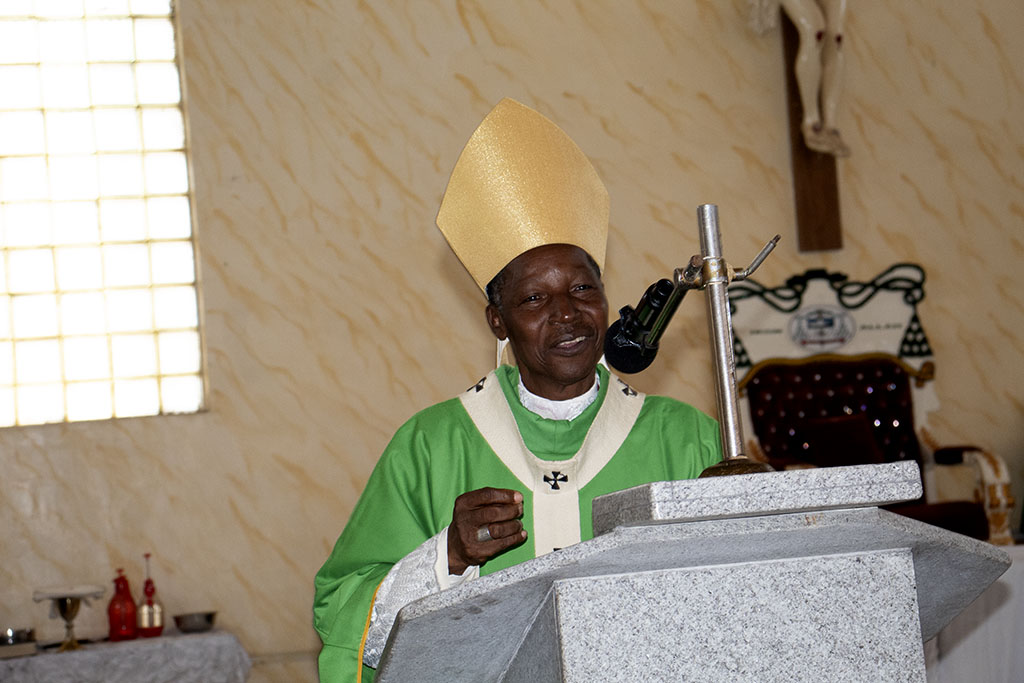
True giving lies in its quality, exemplified by God’s gift of Jesus Christ to humanity for the salvation of souls, says Archbishop Matthew Ishaya Audu, of the Archdiocese of Jos.
Reflecting on the essence of generosity, Archbishop Audu in his homily on Sunday, November 10, recounted biblical and real-life examples of selfless giving that resonated with God’s blessings. He emphasized that giving should stem from the heart, free from obligation or constraint, akin to the widow’s offering in Mark 12:38-44. “Giving must be an act of charity from the heart,” he noted, highlighting that Jesus’ sacrifice for humanity embodied pure, sacrificial love.
The Archbishop shared the story of a newlywed couple who sought refuge at an elderly couple’s farmhouse. The hosts, without hesitation, gave up their only bedroom, a gesture that later moved the young couple to reward their generosity. “They did not give out of surplus but gave their all,” Archbishop Audu said, illustrating true charity.
Archbishop Audu also drew from the Bible, pointing out that God was pleased with Abel’s offering over Cain’s and Abraham’s willingness to sacrifice Isaac (Genesis 4 and 22). He categorized givers into three types: grudge givers who give reluctantly, duty givers who give out of obligation, and thanks givers who give willingly. He stressed that only the last embodies the spirit of true generosity.
He expanded on non-material forms of giving, such as forgiveness, loyalty, exemplary behavior, honor to parents, and lending a helping hand to neighbors. “How do we give? Do we give grudgingly, dutifully, or willingly?” he challenged the congregation.
Archbishop Audu underscored that giving extends beyond monetary contributions, urging the faithful to offer time, support, and love to their families and communities without seeking accolades or personal gain. He cited Luke 6:38 to remind them of God’s promise: “Give to others, and God will give to you. Indeed, you will receive a full measure…”
The Archbishop noted the vulnerability of widows during biblical times and emphasized that God’s attention is often on those who give during moments of weakness. He referenced the widow of Zarephath (1 Kings 17), who received divine sustenance for her act of charity toward the prophet Elijah.
“God’s law of multiplication applies to all acts of giving,” he said. “A miserly person clinging to worldly possessions will never be satisfied.” Archbishop Audu reflected on Jesus’ ultimate self-offering to illustrate the highest standard of giving.
He urged Christians to support their church’s projects, including tithing, as highlighted in Malachi 3:8-11, which promises divine rewards for sacrificial giving. “It must be a giving felt as a part of you,” he concluded, reminding the faithful that gifts of great value to God are those given from the heart, marked by self-denial and love.
In closing, Archbishop Audu encouraged the faithful to examine their motives and strive to be “thanks givers,” following God’s example of abundant generosity. “Let us do what is good, acceptable, and perfect in the eyes of God.”

 TWE Media Network
Leave a comment