
By Juliana Uzoka
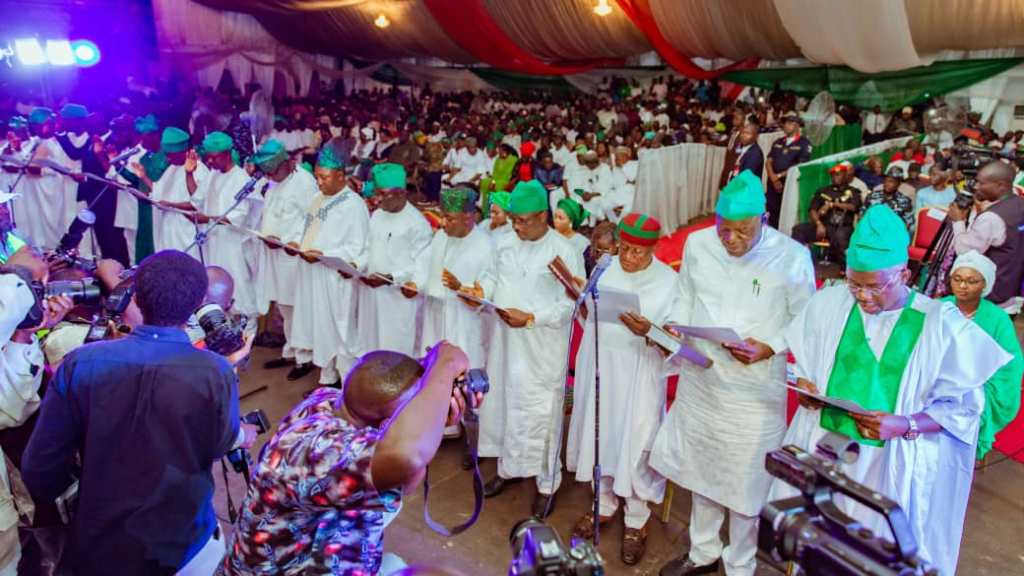
The Plateau State Government has sworn in 17 Local Government Chairmen, marking the first group to benefit from the recently passed Local Government autonomy bill. This comes after nearly 20 years during which local governments were hindered by joint accounts with the state government, severely limiting their functions.
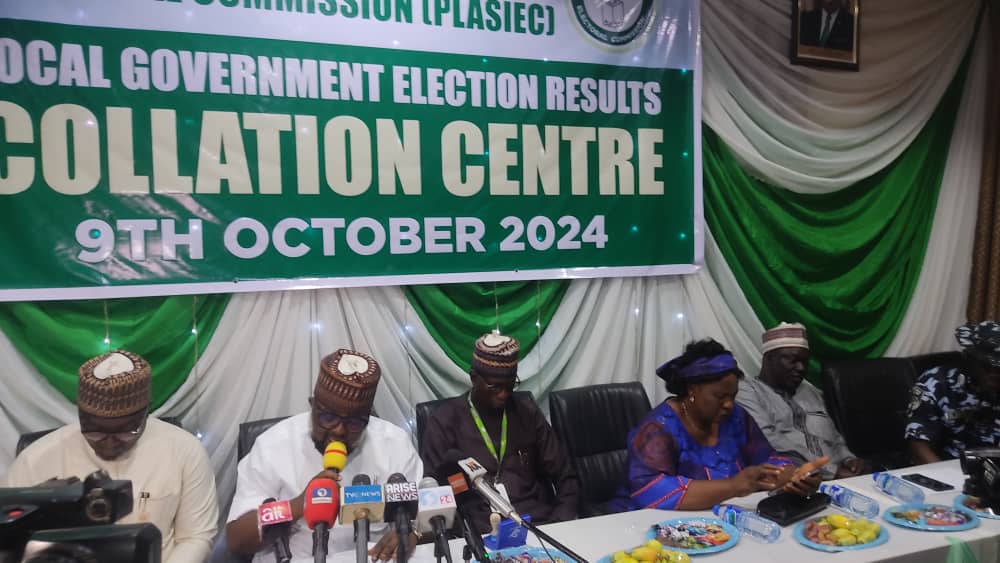
The elections, held on 9 October, were widely regarded as free and fair. On 10 October, the Chairman of the Plateau State Independent Electoral Commission (PLASIEC), Planji Cishak, declared the winners, with the People’s Democratic Party (PDP) securing victory in all local government areas (LGAs).
However, the All Progressives Congress (APC), the leading opposition party, has questioned the authenticity of the results. In response, Plateau State Governor Caleb Mutfwang, speaking at the swearing-in ceremony, urged any aggrieved parties to seek legal recourse rather than taking the law into their own hands.
Governor Mutfwang commended the conduct of the elections, describing them as setting “a new standard for fairness and transparency.” He reaffirmed his administration’s commitment to upholding the constitutional principles that empower local governments, emphasizing their critical role in grassroots development.
“Our administration will foster a synergy with the local governments to accelerate growth in Plateau State,” the governor stated. He also praised PLASIEC for creating an atmosphere of calm and trust among the electorate through its transparent and reliable management of the electoral process.
“I can vouch that these elections were not rigged,” Mutfwang said. “I commend PLASIEC for upholding the integrity of the process, which has restored confidence in our electoral system.”
In a statement by Gyang Bere, Director of Press and Public Affairs to the Executive Governor, Mutfwang urged the newly sworn-in chairmen to be diligent in their roles. He stressed that meeting the needs of the people was paramount and that doing so would enhance the citizens’ livelihoods and contribute to sustainable development.
“We are committed to strengthening local government structures in the state. Autonomy for local governments does not equate to isolation; rather, it empowers these councils to perform more effectively,” the governor emphasized. He also assured the chairmen of an enabling environment for them to fulfill their mandates, while introducing a peer review mechanism to ensure each chairman delivers optimal performance.
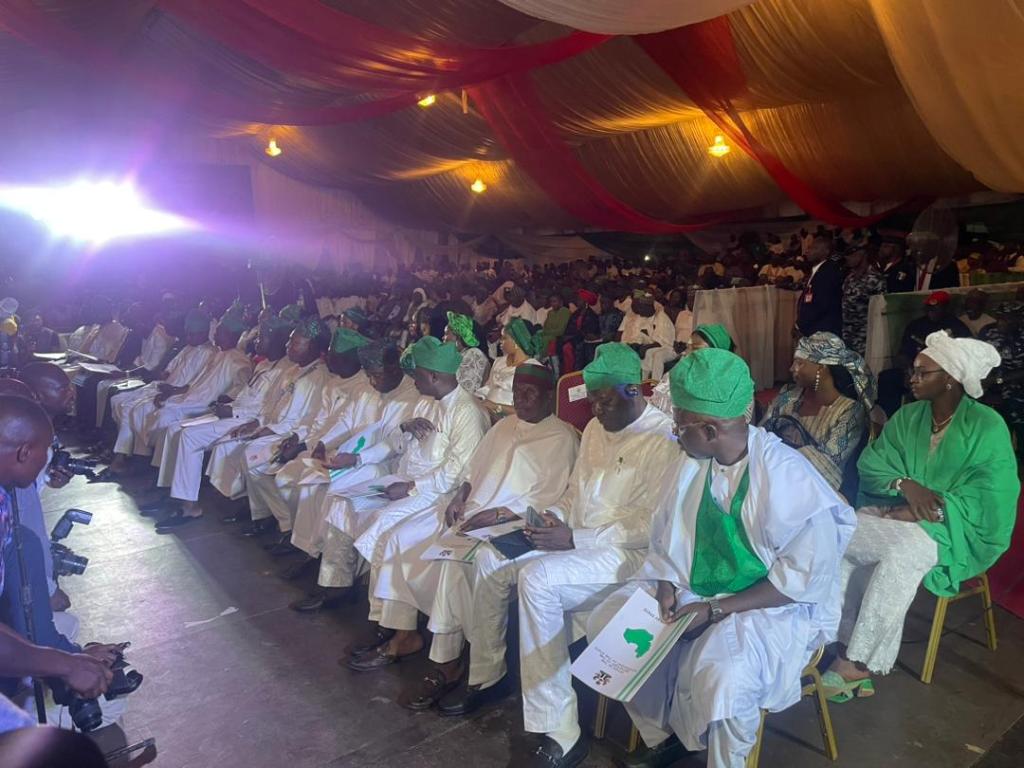
Speaking on behalf of his colleagues, the newly sworn-in Chairman of Wase Local Government Area, Hon. Hamisu Anani, promised that they would work to positively impact grassroots development in line with the people’s expectations.
Here is the breakdown of some of the results:
1. Barking Ladi LGA
Stephen Pam Pwajok of PDP wins with 22303 votes.
2.Mikang LGA
Benard A Alkali of PDP wins with 15071 votes.
3.Shendam LGA
Nikolas Kemi Nshe of PDP wins with 34,566 votes.
4.Bassa LGA.
Joshua Sunday Riti of PDP wins with 18989 votes.
5.Riyom LGA
Bature Sati Shua of PDP wins with 24973 votes.
6. Jos South LGA.
Silas Patrick Dung of PDP wins with 49343 votes.
7.Jos East LGA.
Markus Usain Nyam of PDP wins with 49342 votes.
8. Kanam LGA.
Salihu Ayuba Musa of PDP wins with 71946 votes.
9. Qua’an’pan LGA
Christopher Audu Manship of PDP wins with 35246 votes.
10. Langtang South LGA.
Nanfa A Nbin of PDP wins with 14659 votes.
11. Jos North LGA.
John K Christopher of PDP wins with 97002 votes.
12. Bokkos LGA.
Amalau J. Samuel of PDP wins with 32145 votes.
13. Kanke LGA.
Lapching Ezekiel of PDP wins with 24970 votes.
14.Wase LGA
Hamisu Anani of PDP wins with 42891 votes.
15. Mangu LGA.
Emmanuel Bala Mwolpun of PDP wins with 64639 votes.
Pankshin and Langtang were pending but both Chairmen were later sworn-in.
The Local Government autonomy bill, passed by the Supreme Court on 11 July 2024, grants financial independence to LGAs, allowing them to function without interference from state governments. Plateau State is home to 17 of the 774 local governments across Nigeria.
In a recent plenary session, the Senate emphasized that all states and local governments must comply with the Supreme Court’s ruling, ensuring that funds allocated to LGAs are fully utilized. Attempts by some state governments to circumvent the judgment by passing counter laws, which would maintain joint accounts with LGAs, have been ruled against by the court.
For over two decades, local governments across Nigeria were nearly incapacitated as state governors seized their federal allocations, releasing only insufficient funds at their discretion, leaving LGAs unable to effectively fulfill their mandates.

 TWE Media Network
Leave a comment