By TWE NEWS Desk
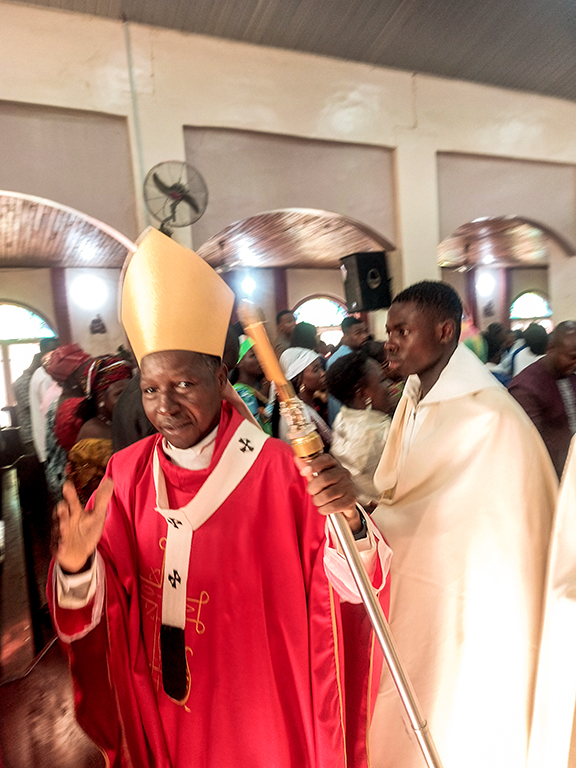
The Catholic Archbishop of Jos, Most Rev. Matthew Ishaya Audu, has called on Christians to embrace the true spirit of Pentecost by allowing the love of God to guide their actions, entrusting their lives to divine wisdom, and fostering unity through Spirit-led communication.
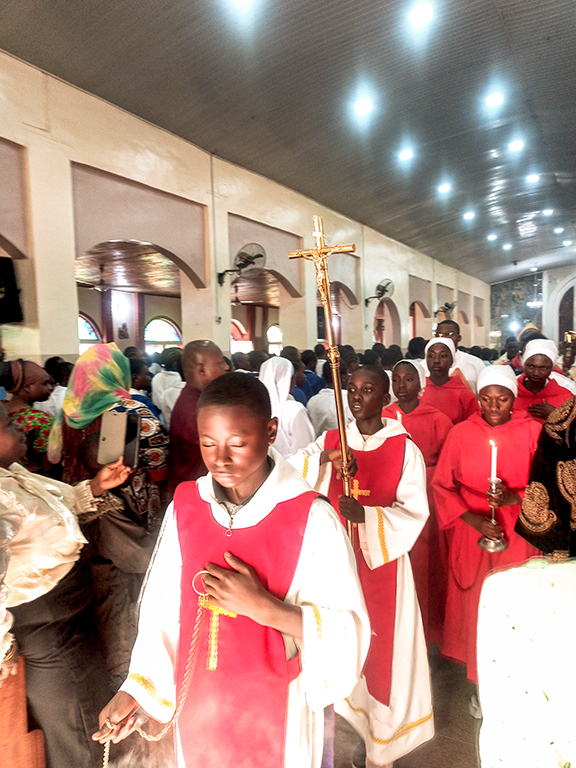
In his homily at the Pentecost Sunday Mass, at St. Louis Parish, Archbishop Audu described the feast as not only the high point of the Easter season but also a powerful reminder of God’s love poured out through the Holy Spirit. He said Pentecost, which marks the descent of the Holy Spirit upon the Apostles and the Blessed Virgin Mary fifty days after Easter, is about God’s desire to dwell within humanity and guide them into truth, peace, and unity.
“Pentecost is about love,” the Archbishop said. “Love is the only language that everyone understands, no matter their tribe or background. It is the language of heaven, the language of God, and the language we must all learn to speak if we want to be true followers of Christ.”
He stressed that love must form the foundation of every Christian action. “Everyone understands a smile. Everyone appreciates kindness. This is the language of Pentecost, and it must begin with each one of us.”
Moving from love to trust, the Archbishop reminded the faithful of the importance of surrendering to God’s will in all things. He described human beings as limited and prone to failure when they rely solely on their own strength, drawing a sharp contrast between the proud builders of the Tower of Babel and the humble Apostles who waited in prayer for the Holy Spirit.
“At Babel, people tried to reach God with their own human efforts. But because their intentions were selfish, God confused their language and they failed,” Archbishop Audu said. “On the other hand, at Pentecost, the Apostles waited in obedience and prayer. God responded by sending the Holy Spirit to guide and empower them.”
He emphasized that success in life, especially in spiritual matters, comes not from human intelligence or effort alone, but from total dependence on God. “We must hand over everything to God in prayer. Whatever seems too difficult, entrust it to God. He knows when and how best to act through the power of the Holy Spirit,” he said.
The Archbishop also reflected deeply on the theme of communication, noting that the miracle of Pentecost restored what was lost at Babel: understanding. “The Holy Spirit brought unity where there was once confusion. While Babel broke humanity into different tongues, Pentecost brought different people together in one Spirit. It is a call to speak with understanding, and most of all, with love.”
Archbishop Audu underscored the importance of discerning the motives behind our words and actions. He warned against invoking the Holy Spirit for revenge or harm. “The Holy Spirit is a Spirit of peace and love, not a weapon for personal battles. His gifts are love, joy, peace, patience, kindness, goodness, trustfulness, gentleness, and self-control,” he said, citing Galatians 5:22-23.
He reminded the faithful that those who have received the Holy Spirit through baptism and confirmation must speak the language of Pentecost, not of Babel—promoting unity, not division; offering forgiveness, not hatred.
“Too many Christians today are frozen in their faith,” he lamented. “We go to church without joy, pray without feeling, and serve God without zeal. Pentecost is the time to ask the Holy Spirit to rekindle the flame of love in our hearts.”
Citing Bishop Fulton Sheen, he said Christians sometimes behave like “God’s frozen people,” going through the motions of faith without enthusiasm. “Today is a good day to ask the Holy Spirit to melt the ice in our souls and make us burning with love again.”
The Archbishop also used humor to illustrate his message, telling the story of Benson, a 40-year-old pastor reluctant to go to church because he felt unwelcome. His mother had to remind him that as the pastor, it was his duty to show up, no matter how he felt. “We are often like Benson,” Archbishop Audu said. “We hide in fear, afraid to speak about God, afraid to be different, afraid to be rejected. But the Holy Spirit is our guide, like Benson’s mother, reminding us that we have a mission.”
In conclusion, Archbishop Audu called on Christians to be active members of the Church, which was born at Pentecost. He urged them to use their gifts in service of the community, transforming their parishes into places of love, forgiveness, and shared mission.
“Our faith must lead to action,” he said. “The Church is universal, made up of all peoples and nations. Let us break down the walls of hatred, pride, and prejudice, and become agents of peace and unity.”
Quoting Jesus’ words to His disciples, “As the Father has sent me, so I send you” (John 20:21), Archbishop Audu reminded the faithful that they, too, are sent into the world to spread the message of God’s love.

 TWE Media Network
Leave a comment