
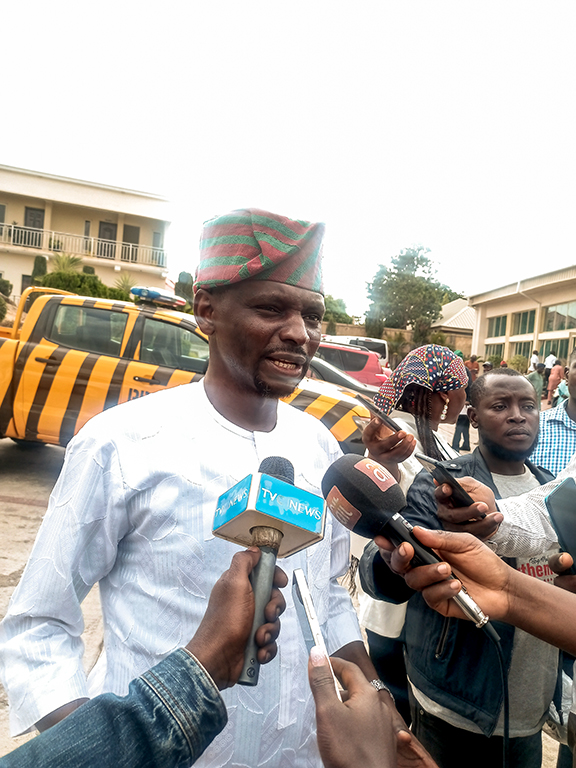
By Juliana Uzoka
In a bid to address rising complaints and rebuild public trust, the Plateau State Ministry of Transport has held a high-level stakeholders’ parley aimed at resolving issues surrounding the perceived excesses of Vehicle Inspection Officers (VIO) in the state.
The meeting, held on Tuesday, April 29 in Jos, brought together key actors in the transport sector—government officials, VIO representatives, law enforcement, and transport union leaders—for a candid dialogue on how to improve service delivery and enhance road safety while protecting the rights of road users.
Hon. Jatau Davou Gyang, Commissioner for Transport, said the government’s responsibility is to serve the people, and that includes addressing the challenges facing the transportation sector, especially the outcry against the conduct of VIO officials.
“This engagement is meant to chart a new course,” he said. “We must be honest about what has gone wrong, recognize what we’ve done right, and together find the way forward. We cannot ignore the voices of our people.”
He acknowledged that many road users have raised serious concerns about the VIO’s methods, which include allegations of harassment, extortion, lack of transparency, and imposition of disproportionate penalties. These issues, he noted, have strained relations between the VIO and the public and undermine the trust needed for effective road safety enforcement.
“While the VIO plays a vital role in ensuring roadworthiness and safety, the manner in which some officers discharge their duties has come under scrutiny,” Hon. Gyang admitted. “This parley is to seek a balance—an equilibrium—where both officers and citizens treat each other with dignity and understanding.”
The Commissioner emphasized that the government is not interested in revenue generation at the expense of public safety. “Our focus is on saving lives, not collecting fines,” he said, stressing that penalties must be fair, proportionate, and rooted in the law.
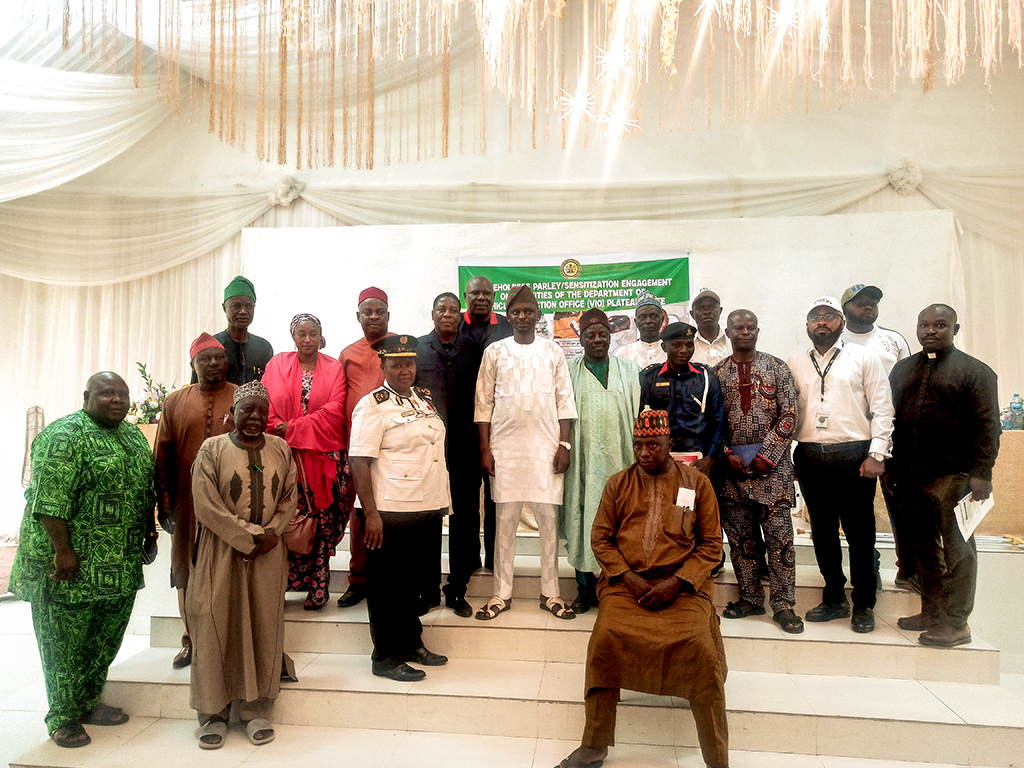
Chief Vehicle Inspection Officer, Anna Mweltor, gave a detailed presentation on the responsibilities of the VIO and called for stronger public sensitization on road safety rules. She noted that the agency enforces 62 safety rules and urged drivers to be aware of their responsibilities.
She also acknowledged that some officers have gone overboard in enforcement but emphasized that many are committed professionals. “There is a need for mutual understanding and cooperation,” she said. “We also need support from government to provide smart uniforms and recruit more trained officers to boost confidence and efficiency.”
Mweltor encouraged drivers to align their license renewal dates with their birthdays as a simple way to remember annual renewals. She pledged to forward the outcomes of the engagement to relevant authorities for implementation.
The Federal Road Safety Corps (FRSC) Sector Commander in Plateau State, Maxwell Lede, praised the initiative as a bold step towards reform. He clarified that while the duties of the FRSC and VIO may seem similar, both agencies are focused on improving road safety.
“If there’s a perception of excess, then it’s time to go back to the drawing board,” Lede said. “Dialogue like this is how we make progress. The government’s willingness to open its activities to public scrutiny is commendable.”
He also urged drivers to study relevant traffic laws, keep their documents up to date, and maintain their vehicles. “Understanding the law helps avoid conflict,” he noted.
Elder Markus Yakubu Jatau, Chairman of the Tricycle Union in Plateau State, described the parley as timely and valuable. He called for continuous engagement and mutual respect between VIO officials and road users.
“This is a litmus test,” he said. “We want sustained dialogue so both sides can understand each other. Some VIO officers don’t give room for discussion, and that breeds tension. They must be trained to relate better with the public.”
The interactive session provided a platform for road users and stakeholders to air their concerns and propose practical solutions. Suggestions ranged from the use of technology to track traffic offenders, the introduction of body cameras for VIO officers, and increased media campaigns to educate the public on road safety rules. Participants also called for the digitization of fine payments, the creation of VIO clubs in schools, and the engagement of whistleblowers to report unrecorded violations.
Some participants criticized the disproportionate fines compared to the cost of proper vehicle documentation and raised concerns over the conduct of some VIO personnel. Others proposed that drivers be sensitized on the 62 VIO-related offences to avoid unnecessary infractions.
Responding to the suggestions, the Commissioner questioned whether the harassment of VIO officers should be tolerated and ordered that a case involving a runaway traffic offender, reported at the forum, be reopened. He also encouraged the public to utilize the VIO’s “Wellness Garage,” a testing ground designed to thoroughly assess vehicle conditions and ensure roadworthiness. He warned that the government would soon begin strict enforcement of roadworthiness compliance, urging vehicle owners to submit their vehicles for checks every six months.
On enhancing security, Hon. Gyang disclosed plans to digitize the database of tricycle and bus operators in the state. In partnership with JEOPAC, the ministry will implement a QR code system that allows passengers and security operatives to verify the identity of tricycle riders and other commercial vehicle operators. He explained that the initiative is aimed at curbing kidnapping and other crimes linked to commercial transport. “Now every tricycle will have their data stored. A QR code should be used so passengers can scan and see the identity of the rider. This is to curb crime in the state,” he stated.
He also announced that the Federal Road Safety Corps (FRSC) is set to upgrade its surveillance equipment, with plans to install cameras at entry and exit points in the state to monitor vehicular movement and improve security.
The Commissioner concluded by reaffirming the government’s resolve to secure the lives of citizens and improve transport regulation in Plateau State.

 TWE Media Network
Leave a comment