
By Juliana Uzoka
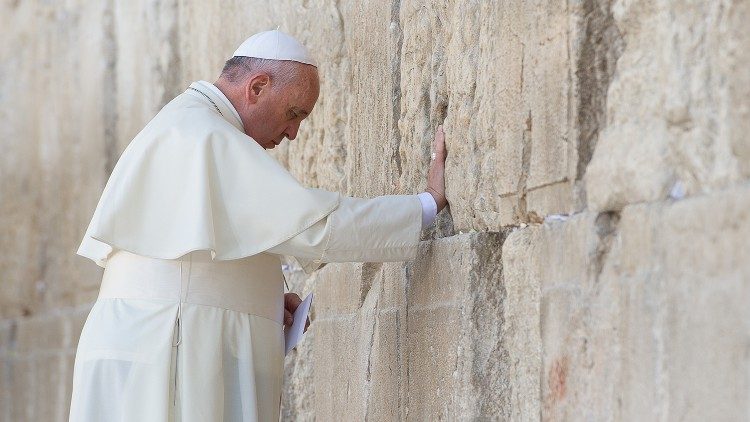
Pope Francis’ legacies have set a trajectory for the Catholic Church in the wake of modernity for an inclusive body of Christ that caters to the needs of all.
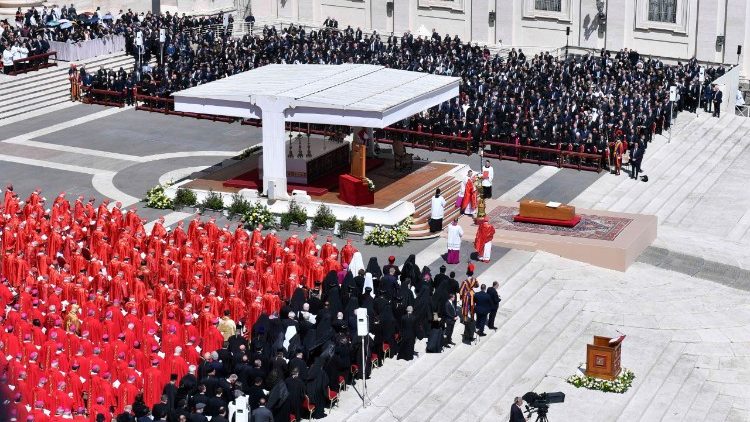
Pope Francis, who died on Easter Monday, 21 April, at 7:35 a.m. due to health complications, was laid to rest on Saturday, April 26, amidst thousands of mourners from all walks of life who converged on St. Peter’s Square to bid him a final farewell as “he returned to the Father’s house.”
Pope Francis, known for his humility, concern for the poor, and bold calls for reforms, had suffered poor health at various points in his papacy. Most significant were the colon surgery he underwent in July 2021, another surgery in June 2023, pulmonary complications in November 2023, and his hospitalization at Rome’s Gemelli Hospital on February 14, 2025, where he spent over five weeks for the treatment of bronchitis and respiratory infection.
The 266th Pope, born Jorge Mario Bergoglio in Buenos Aires, Argentina, in 1936, was elected Pope in March 2013. His pontificate, which spanned about 12 years, emphasized mercy, inclusion, care for creation, and a Church where the Shepherd “smells like his sheep” – a “poor Church for the poor,” advocating mercy over judgment.
According to the Holy See Press Office, over two hundred and fifty thousand people came to pay their respects to the pontiff who had a profound impact on their lives and changed the course of history in the Catholic Church, advocating peace, unity, inclusiveness, care for the poor and the elderly, and several other reforms. These reforms sought to infuse the Church’s traditional austere doctrines with a spirit of compassion and inclusivity, bridging the gap between timeless teachings and contemporary human struggles.
The streets of Rome were filled with over 150,000 others, whom the Holy See Press Office disclosed had come out to bid farewell as Pope Francis’ coffin was taken in procession to the Basilica of Saint Mary Major, where he was buried close to his beloved Icon of the Blessed Virgin Mary.
The atmosphere, charged with emotion, stood still as Cardinal Giovanni Battista Re, joined by some 250 Cardinals, Patriarchs, Archbishops, priests, and consecrated religious, celebrated the Requiem Mass.
In his homily, Cardinal Re, the Dean of the College of Cardinals, highlighted the unique leadership attributes of Pope Francis that set him apart and etched his memory deep into the hearts and minds of those he shepherded and those who encountered him during his 12 years of papacy.
Described as a Pope who chose community through closeness to the people, he remained faithful to the very end to the “deep love for the Church, which he wanted open to everyone,” the Vatican News reported.
“Despite his frailty and suffering towards the end, Pope Francis chose to follow this path of self-giving until the last day of his earthly life… following in the footsteps of his Lord, the Good Shepherd,” Cardinal Re remarked.
“The final image we have of him, which will remain etched in our memory, is that of last Sunday, Easter Sunday, when Pope Francis, despite his serious health problems, wanted to give us his blessings from the balcony of Saint Peter’s Basilica. He then came down to this Square to greet the large crowd gathered for the Easter Mass while riding in the open-top Popemobile,” he added.
Pope Francis’ decision to take on the name “Francis” after Saint Francis of Assisi set the tone for his pastoral plan and style, imbibing the spirituality of the Saint who had a great love for the poor.
Described as “a Pope among the people,” the homilist further underscored his intriguing nature, which encompassed his resolute personality, temperament, and form of pastoral leadership, all of which contributed to the indelible style with which he governed the Church, said Cardinal Re.
“He was a Pope among the people,” welcoming and embracing everyone, especially the marginalized, those he termed to be on the peripheries, and most importantly, “a Pope attentive to the signs of the times and what the Holy Spirit was awakening in the Church.”
Pope Francis never shied away from the challenges faith faced in modern times but instead sought to explain each situation within the context of Church teachings and the inspired wisdom of the Gospel.
He encouraged Christians to live out their faith amid these challenges and contradictions, which he saw as part of an “epochal change.”
Central to Pope Francis’ vision was evangelization. Cardinal Re explained that this was expressed in his Apostolic Exhortation Evangelii Gaudium, where he viewed the Church as a “field hospital” concerned with “the world’s wounds.”
His insistence on working for the poor was relentless. Cardinal Re highlighted his outreach to migrants and refugees and his visits to their camps, mostly at borders, revealing his deep identification with their suffering. This cause, dear to him, often led him to admonish world leaders insensitive to their plight.
“His gestures and exhortations in favour of refugees and displaced persons are countless. His insistence on working on behalf of the poor was constant,” noted Cardinal Re.
During the late pontiff’s 47 Apostolic Journeys, he fostered interreligious dialogues and extended the Church’s presence “to the farthest peripheries,” places of “deep need and conflict,” Cardinal Re remarked, highlighting some of these, including his visit to Iraq where he brought his “pastoral balm,” and his trips to the Asia-Oceania region where faith was rekindled.
Pope Francis will be remembered for his constant advocacy for mercy in a world divided across several lines. Cardinal Re said it is then not surprising that Pope Francis’ unwavering appeal for mercy was most evident in his declaration of the Extraordinary Jubilee of Mercy in 2016 and his relentless call for a “culture of encounter” against the dominant “throwaway culture.”
Fostering unity and fraternity for “global solidarity and peace” remained a cause Pope Francis pursued with vigour. His encyclical Fratelli Tutti and the 2019 Abu Dhabi Joint Declaration on Human Fraternity for World Peace and Living Together highlight his enduring wish for global solidarity and peace, Cardinal Re emphasized.
He further stressed that Pope Francis was quite vocal and at the forefront of any conflict, calling for ceasefires and dialogue while always maintaining that “war is a defeat for humanity” — a cause he never shied away from and for which he was widely acclaimed.
While Pope Francis’ Requiem Mass drew many dignitaries, with numerous religious leaders, Heads of State, Heads of Government, and official delegations from across the world attending, Cardinal Re said nothing could be more convincing than the massive support and solidarity shown during the Mass and the period of mourning for the late pontiff, who “touched the minds and hearts” of many and is deeply loved.
In concluding the homily, he reversed the request often made by Pope Francis at the end of his audiences and meetings: “Do not forget to pray for me.” Now Cardinal Re asked for the intercession of the late pontiff for the Church, for Rome, and for the whole world from heaven.
“Dear Francis, we now ask you to pray for us. May you bless the Church, bless Rome, and bless the whole world from heaven as you did last Sunday from the balcony of this Basilica in a final embrace with all the people of God — and also embrace humanity that seeks the truth with a sincere heart and holds high the torch of hope.”
It will be recalled that on Easter Sunday, Pope Francis, during his traditional Urbi et Orbi blessing — which was read by Archbishop Diego Ravelli, the master of liturgical celebrations — left the faithful a lasting message that characterized his pontificate: “Love has triumphed over hatred, light over darkness, and truth over falsehood. Forgiveness has triumphed over revenge. Evil has not disappeared from history; it will remain until the end, but it no longer has power over those who accept the grace of this day [Easter].”
The Archbishop further voiced Pope Francis’ written homily, which decried sadism: “What a great thirst for death, for killing, we witness each day in the many conflicts in different parts of our world! How much violence we see, often even within families, directed at women and children! How much contempt is stirred up at times towards the vulnerable, the marginalized, and migrants!”
In his final appeal, the Pope called for political leaders to use the instruments at their disposal to help the needy and to maintain an atmosphere of peace.
“[Jesus] fills us with the certainty that we too are called to share in the life that knows no end, when the clash of arms and the rumble of death will be heard no more. Let us entrust ourselves to Him, for He alone can make all things new,” noted Cardinal Re.
Pope Francis’ legacies include landmark efforts at reform.
He convened Synods of Bishops to discuss family life, LGBTQ ministry, and the role of women in the Church. He established commissions to address clergy sexual abuse and advocated for environmental justice through his encyclical Laudato Si’.
In reflecting on the life and passing of Pope Francis, words often fall short of capturing the depth of his impact. Writing this tribute came from a place of profound respect and gratitude, even as it stirred emotions too deep to easily express. May these words honor his memory, celebrate his enduring legacy, and invite all who read them to carry forward his spirit of humility, compassion, and hope.

 TWE Media Network
Leave a comment