
Editorial by Juliana Uzoka
Call it a miracle or a triumph of exceptional medical care—Pope Francis has been discharged from Gemelli Hospital after 38 days of hospitalization, during which he was treated for double pneumonia and other health challenges.
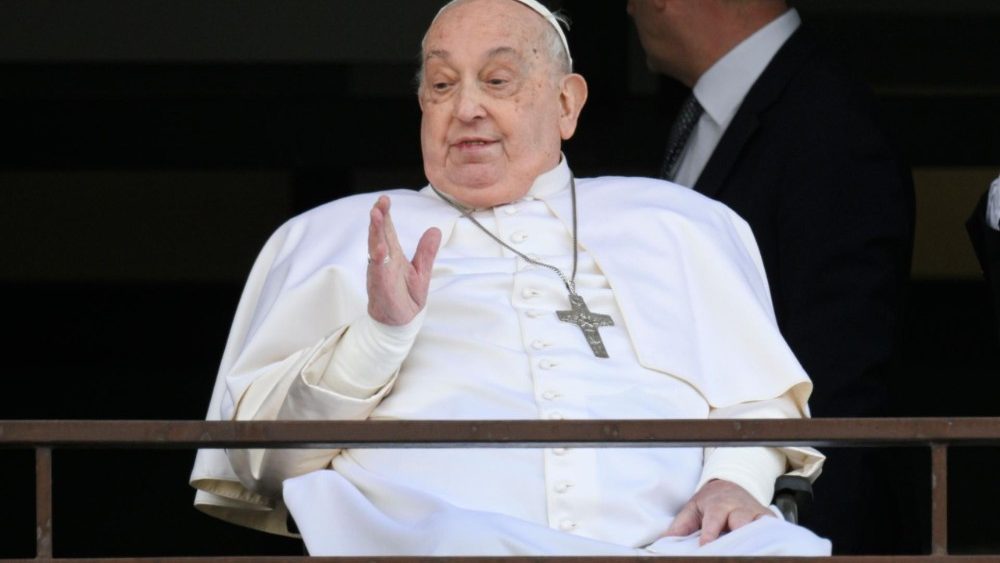
On the morning of Sunday, February 23, the Holy Father made an appearance at the hospital before his scheduled discharge to express gratitude for the love and prayers he received. He acknowledged the faithful and visitors who kept vigil, offering flowers and prayers for his recovery. Many had longed for a glimpse of him, hoping he would appear at the window, as was his custom, to wave to those seeking communion with him. That wish was fulfilled, much to the excitement of the crowds gathered outside, following the announcement a day earlier that he would be leaving the hospital.
During his time in the hospital, Pope Francis found solace in prayer and meditation. From his chapel on the 10th floor, he entrusted the world to God’s care, just as millions around the globe did for him. Rosaries were recited, the Eucharist was celebrated, and vigils were held, while those unable to be physically present carried him in their hearts, praying for his recovery so he could continue the mission that has endeared him to many.
The atmosphere around Gemelli Hospital was filled with the fragrance of devotion, as flowers were placed in Saint John Paul II’s fountain, where the faithful gathered for weeks, offering prayers for the Pope’s swift recovery. The Holy Father, in turn, responded with gratitude. On March 7, in St. Peter’s Square, his voice—though weak—carried a message of encouragement and appreciation for the faithful, delivered through an audio recording. Again, on March 16, he reassured them of his well-being by permitting the release of a photograph after he concelebrated Mass in the hospital chapel.
Pope Francis’ suffering calls to mind that of Saint John Paul II, who was hospitalized at Gemelli for 55 days during his own health struggles. Could one call it a miracle? Perhaps. But what is undeniable is the unwavering faith that has sustained these spiritual leaders through their trials.
At 88 years old, Pope Francis has remained steadfast in his mission, offering daily prayers for a world yearning for peace and relief from suffering. His recovery is a testament to divine providence, a reminder that God remains ever present in the journey of the faithful—especially in a world marred by conflict, selfishness, and environmental crises.
While the Pope’s discharge is cause for celebration, his recovery is ongoing. He will now convalesce at Casa Santa Marta in the Vatican, regaining his strength after the toll double pneumonia took on his lungs. Yet, even in this period of rest, his resilience stands as a rebuke to detractors who doubted his ability to recover, some even speculating about his incapacity.
Hope remains God’s gift to the faithful, made manifest through prayer. And so, with hands joined in supplication, the world’s 1.3 billion Catholics await their Holy Father’s guidance as he leads them into a Year of Hope.

 TWE Media Network
Leave a comment