
By Juliana Uzoka
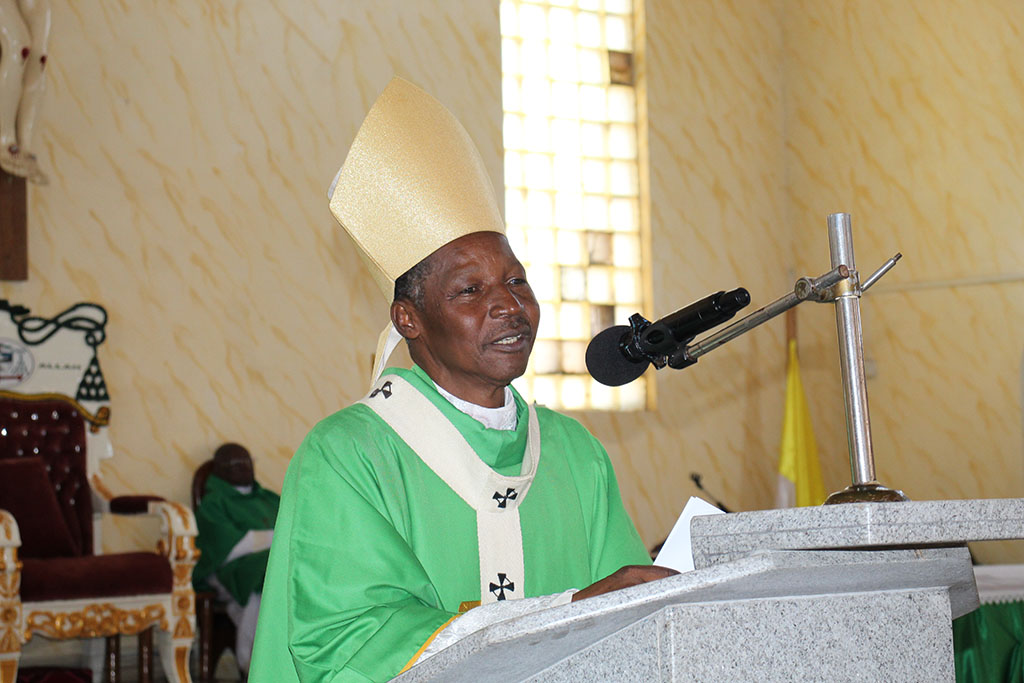
Archbishop Matthew Ishaya Audu, of Jos Archdiocese has emphasized that true love, rooted in love for God and neighbor, breaks down barriers that distance us from God.
Archbishop Audu shared this message on Sunday, November 3, while delivering a homily on a theme centered on love as the most vital element of human existence. Referencing the Gospel of Mark 12:28-34, he recounted the moment when a scribe, known for intellectual prowess in matters of law and humanity, asked Jesus Christ, “Which commandment is the first of all?”
The Archbishop emphasized that this question invites deep reflection on how well one extends love to others, both to those they see and to God, whom they do not see. He acknowledged that while the scribe’s question might have been insincere, it provided Jesus an opportunity to highlight what is often missing in human relationships—genuine love for one’s neighbor. As Jesus noted, “there is no other commandment greater than these.”
Archbishop Audu further explained that Jesus’ response about loving God and loving one’s neighbor as foundational principles reflects the “solid foundation of our Christian religion.”
“If we observe these two commandments,” he said, “we are fulfilling the whole law and the prophets.” He added that by doing so, “we are serving God and showing our gratitude to Him for all His goodness to us.”
He outlined three key aspects of Jesus’ teaching on love: to love God, to love one’s neighbor, and to love oneself. “These form a complete circle,” he said, adding that true love for others begins with a healthy love for oneself, as love must first come from within.
To illustrate the significance of love, especially in God’s judgment, Archbishop Audu shared a story about Abou Ben Adhem, a man who encountered an angel preparing a list of those who loved God. When told his name was not on the list, he asked the angel to include him as someone who had shown love for his neighbor. Archbishop Audu highlighted that this act of love for one’s neighbor qualified him for heaven, as love for others unequivocally reflects love for God.
“This story shows that true love of God and true love of our fellow human beings are like two sides of the same coin,” he remarked. “One cannot exist without the other.”
The Archbishop also addressed the importance of law in society, relating it to the core message of God’s love in today’s Gospel. He suggested that this principle of love, as commanded by God, should guide every aspect of daily living, noting, “No nation survives under a chaotic atmosphere.” Emphasizing the rules that govern humanity, he stated that the Holy Bible sets a standard for understanding God’s will for His children and should guide society’s commitment to human rights, justice, and peace.
In conclusion, Archbishop Audu called for reforms in Nigeria’s legal system, advocating that, just as the commandments to love God and neighbor address everything that unites humanity with the Creator, similar principles should guide the structure of human governance in nations. He added that religion should not be “skewed” to suit personal interests.

 TWE Media Network
Leave a comment