Photo Credit: Vatican News
By Juliana Uzoka
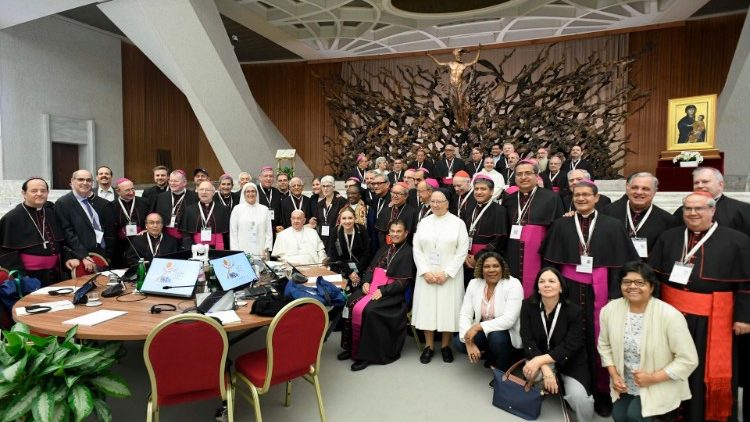
After three years of reflection, prayer, and global participation, the Synod on Synodality ended with Pope Francis urging the Catholic Church to embrace a renewed mission as a dynamic and missionary body. Held in St. Peter’s Basilica, the final Mass marked the end of the XVI Ordinary General Assembly of the Synod of Bishops, which has been defined by its commitment to building a “humble and synodal Church” guided by the Holy Spirit.
A Journey of Reflection and Renewal
Initiated in 2021, the Synod aimed to deepen the Church’s mission of peace, unity, and forgiveness, inviting all Catholics to participate in a path of communal discernment. Following extensive meetings at local, regional, and continental levels, the final phase took place from October 2–27, 2024, with representatives from around the world gathering in the Vatican to seek shared understanding and purpose.
During his homily, Pope Francis reflected on the Synodal journey, comparing the Church’s mission to the Gospel story of Bartimaeus, the blind man who reached out to Jesus for healing. He highlighted that Bartimaeus symbolizes the “spiritual blindness” that can hinder believers, urging the Church to avoid becoming “sedentary” and detached from the world’s urgent needs. Instead, he called for an active Church willing to “get its hands dirty” in response to human suffering and the call to evangelize.
Themes and Goals of the Synodal Process
Throughout the Synod, sessions were guided by themes of communal “journeying together” and learning through the Spirit. Pope Francis opened the October phase by encouraging participants to “strive to understand the path we must follow to reach the destination the Lord desires for us.” He invoked Saint Paul VI, who established the Synod of Bishops in 1965, emphasizing that this process reflects the Church’s continual learning and renewal through the Holy Spirit.
The theme for the final phase, “How to be a Missionary Synodal Church,” shaped discussions among approximately 464 delegates, including bishops, clergy, religious, and laypeople. Key topics included pastoral care, ecclesiastical structures, and the clarification of Church doctrines. During an opening retreat led by Cardinal Mario Grech, Secretary-General of the Synod of Bishops, participants engaged in two days of prayer, invoking the intercession of the Blessed Virgin Mary through the Holy Rosary.
Calls for a Synodal Mission and Concrete Actions
As the Synod drew to a close, Pope Francis expressed hope that the assembly’s conclusions would inspire concrete actions, adapted to the unique contexts of each continent. He described the final document as both a “gift with multiple dimensions” and a source of unity, offering guidance for each local Church to serve God’s people effectively. The Pope encouraged all Catholics to carry the Spirit’s gifts into the world, becoming “a Church that listens, prays, and acts with humility.”
In remarks on the significance of the Holy Spirit, Pope Francis reminded the assembly that the Spirit serves as the Church’s unifying force across all cultures and contexts. Quoting French Catholic mystic Madeleine Delbrêl, he said, “There are places in which the Spirit breathes, but there is only one Spirit who breathes in all places,” reaffirming the call to embrace this shared mission of evangelization and renewal.
Ongoing Journey of Synodal Conversion
As the Church transitions into the implementation phase, Pope Francis emphasized that the synodal journey is a “continuous process of conversion,” not an endpoint. Reflecting on the Synod’s legacy, British theologian Father Timothy Radcliffe encouraged participants to remain open to the Spirit, allowing it to guide the Church’s ongoing renewal and mission.
The Synod on Synodality, Pope Francis concluded, offers a framework for a participative and listening Church, equipped to address contemporary challenges and unite in the call to bring the Gospel’s joy to the world.

 TWE Media Network
Leave a comment