

TWE News desk
Pope Francis called on believers to see and approach the poor and marginalized with compassion, reminding them that in serving others, they encounter Christ. Reflecting on the transformative power of Christ’s love, the Pope urged the faithful to open their hearts and recognize Jesus in the faces of those in need.
The Pope’s message during his Sunday Angelus centered on the day’s Gospel from St. Mark, which recounts Jesus’s encounter with Bartimaeus, a blind man. The passage, according to Pope Francis, offers three key reflections: “the cry, the faith, and the journey.” The Pope explained that Bartimaeus’s story is a testament to how faith and trust in Jesus can bring about profound transformation and a renewed sense of purpose.
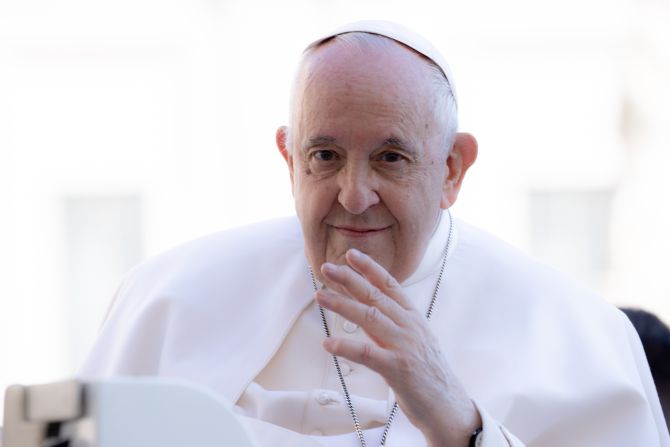
“Bartimaeus’s cry,” Pope Francis said, “was not just a plea for help but a declaration of his identity. In calling out to Jesus, he said, ‘I exist, look at me.’” The Pope observed that Jesus not only “sees” Bartimaeus but also listens to him deeply, responding to his faith with healing and compassion. “Christ hears the cries of those who long to be recognized and loved,” he added.
Pope Francis went on to emphasize the power of faith, recounting Jesus’s words to Bartimaeus: “Go, your faith has saved you.” In this simple statement, he explained, Christ highlights the role of belief in restoring vision and bringing light to the darkness within. “Bartimaeus could see because he believed,” the Pope affirmed, calling the faithful to look upon others with the same compassion that Christ has shown.
The homily concluded with a reflection on the journey Bartimaeus undertakes after his healing, as he chooses to follow Jesus. “Each one of us is Bartimaeus,” Pope Francis remarked, “blind in our ways until we draw near to Jesus.” He reminded those gathered that by showing love to the poor, they allow themselves to encounter Jesus through their compassion and solidarity.
In closing, the Pope entrusted the faithful to the care of Mary, “the dawn of our salvation,” and prayed that her guidance would keep them walking in the light of Christ. The Angelus concluded with a prayer for strength and peace for all those seeking a deeper faith.

 TWE Media Network
Leave a comment