
By Juliana Uzoka
The Catholic Lawyers Association of the Jos Archdiocese has been called to be pillars of truth and justice for the nation yearning for integrity.
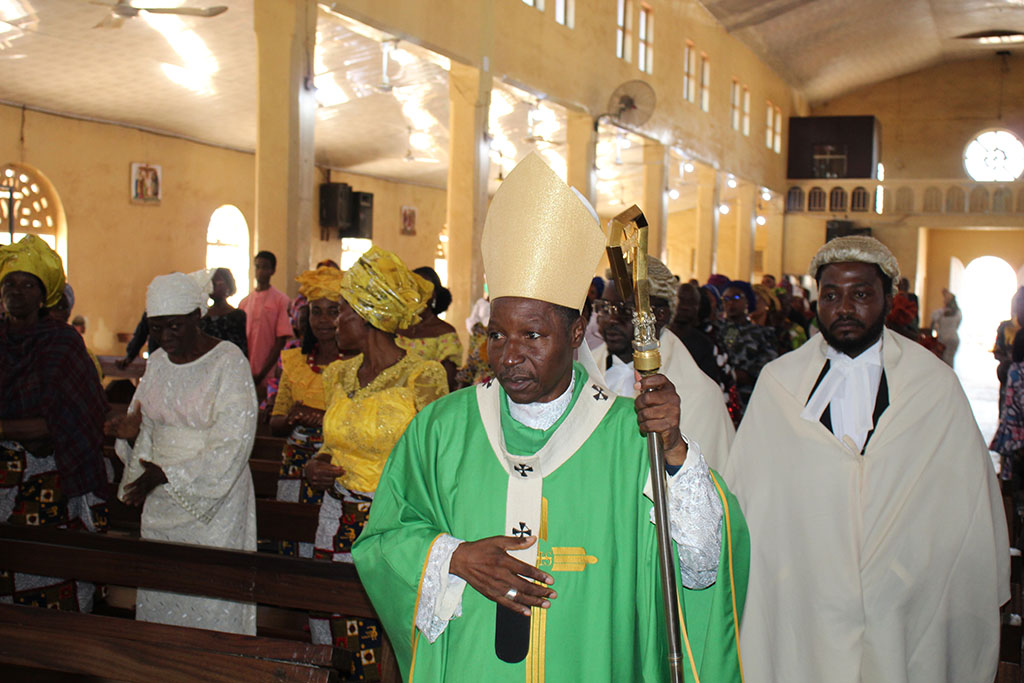
This charge was given by Archbishop Matthew Ishaya Audu during the celebration of Mission Sunday, which also marked the Legal Year for the association, at Fatima Cathedral, Jos, on Sunday, October 20.
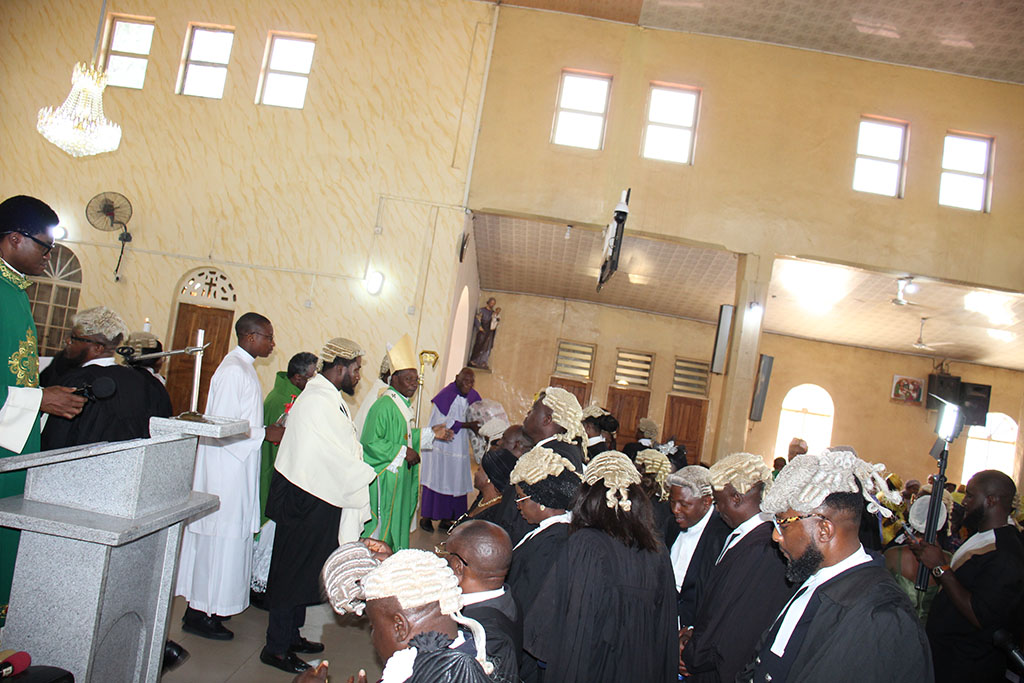
Dressed in their formal court attire, the lawyers’ appearance—black flowing robes, stiff white collars, and solemn wigs—mirrored the gravity of the day’s themes: justice, integrity, and moral duty. Their dignified and composed presence underscored their role in the pursuit of justice, as highlighted by the Archbishop.
Balancing Justice and Family Life
In his homily, Archbishop Audu urged lawyers and judges to strike a delicate balance between their demanding professional roles and the needs of their families. “There is a disparity between public service and family service,” he observed, adding that many lawyers devote their lives to interpreting the law in courtrooms while neglecting the sufferings within their own homes.

“God will judge you,” he warned. “You sit here today, but remember, you are seated in the place of God, and He will judge your actions both in the courtrooms and within your family.” His poignant message reflected the authority and responsibility symbolized by the lawyers’ court attire, reminding them of the importance of carrying the same commitment to justice into their personal lives.
Mission Sunday: A Call to Evangelism
Celebrated annually, Mission Sunday invites Catholics worldwide to renew their commitment to missionary work through prayers and sacrifices. Archbishop Audu, citing Pope John Paul II, reiterated that this day is vital in sustaining the Church’s evangelistic mission. Funds collected on this day are sent to support missionary activities in underprivileged areas, Catholic schools, and the maintenance of indigenous priests.
He encouraged the congregation to give generously, emphasizing that “we are still beneficiaries of this noble cause.” The Archbishop made it clear that evangelism and the propagation of the Gospel remain central to the Church’s mission, urging all to support the growth of the faith.
Legal Year: Upholding Justice in a Time of Turmoil
In his address to the lawyers, Archbishop Audu reflected on the sacredness of their profession. Comparing their role to that of Christ, who came to redeem humanity, he called on the lawyers to act as Christ’s representatives in the world: “Without you, the country cannot, for you have the power to free or imprison.”
However, he lamented the corruption that has crept into the legal system, urging lawyers to resist nepotism, favoritism, and political influences that undermine justice. “You are entrusted with the same responsibility Jesus had: to uphold justice. Do not let corruption tarnish that role.”
Touching on the high cost of living and the suffering of many Nigerians, the Archbishop called on the lawyers to advocate for policy reforms and the repeal of unjust laws that plunge the populace into hardship. “The country is in a state of decay; people are dying daily, unable to afford basic needs,” he said. His words, delivered to an audience dressed in the solemn black robes of their profession, underscored the urgent need for reform in the nation’s legal and governance structures.
Following his speech to the lawyers, Archbishop Audu delivered a homily during the celebration of World Mission Sunday. In his message, he echoed themes of selflessness and service, encouraging the faithful to recommit to the Church’s missionary mandate. “The Son of Man did not come to be served, but to serve,” he reminded the congregation, pointing to Christ’s example of humility and urging Catholics to engage in service that transcends the pursuit of personal glory.

He also highlighted the global call from Pope Francis, stressing the significance of this year’s theme, “Go invite everyone to the banquet,” as a reminder to share the Gospel without discrimination. Archbishop Audu called on Catholics to support missionary efforts through prayers, donations, and active involvement, ensuring that the light of Christ reaches every corner of the world, especially in regions of dire need.
The Archbishop concluded by urging both legal professionals and the faithful to embody the values of justice, humility, and service in all areas of life, reinforcing that the pursuit of justice in the legal profession should align with the Church’s broader mission of love and service to humanity.
Asserting the crucial role of lawyers in executing justice and shaping the justice system in the state, retired former Chief Justice of Plateau State, Justice Damulak, acknowledged that while he could not exonerate the legal profession from wrongdoings, significant efforts had been made to sanitize the system. “As a body, we strive to sensitize our members whenever we observe irregularities in the execution of their duties, he added.
A member of the Judicial Service Commission in Plateau State, Henry Longkwan, called on Catholic lawyers to set the pace in upholding the tenets of justice and to represent Christ through their actions. He acknowledged the challenges within the judicial system, noting that it is often flawed in the execution of justice.
Longkwan emphasized the need to repeal “obnoxious laws” and ensure that new, better laws are enacted for the good of society.
The Chairman of the Catholic Lawyers in Jos Archdiocese, Timothy Quidon Esq., highlighted the association’s motto, “Justice through Christ,” as a guiding principle for their actions. He said, “The motto serves as a reminder of what the Church expects from us. We ensure that our actions as Catholic lawyers are a reflection of the Gospel.”
Quidon stressed that their Christian faith comes first before their roles as lawyers. “The Archbishop’s call was timely, reminding us of our motto and the responsibility to dispense justice through Christ if this country is to survive,” he added.
He further explained that Catholic lawyers are involved in charitable causes, especially through their monthly legal clinic, where they visit communities to assist indigent individuals who cannot afford legal representation.
“When we review cases and find that someone’s rights have been violated, we take it upon ourselves to represent them, both in court and beyond,” Quidon said.
He also noted that legal aid is a cause deeply valued by the Nigerian Bar Association due to the humanitarian services it provides through such initiatives.
Awards and Recognition
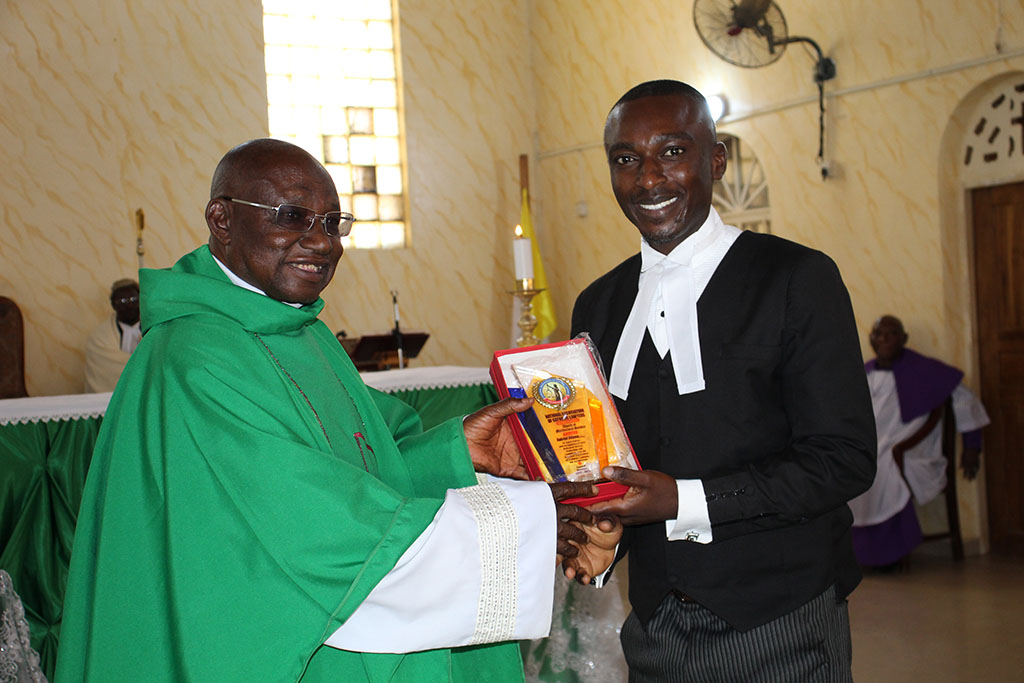
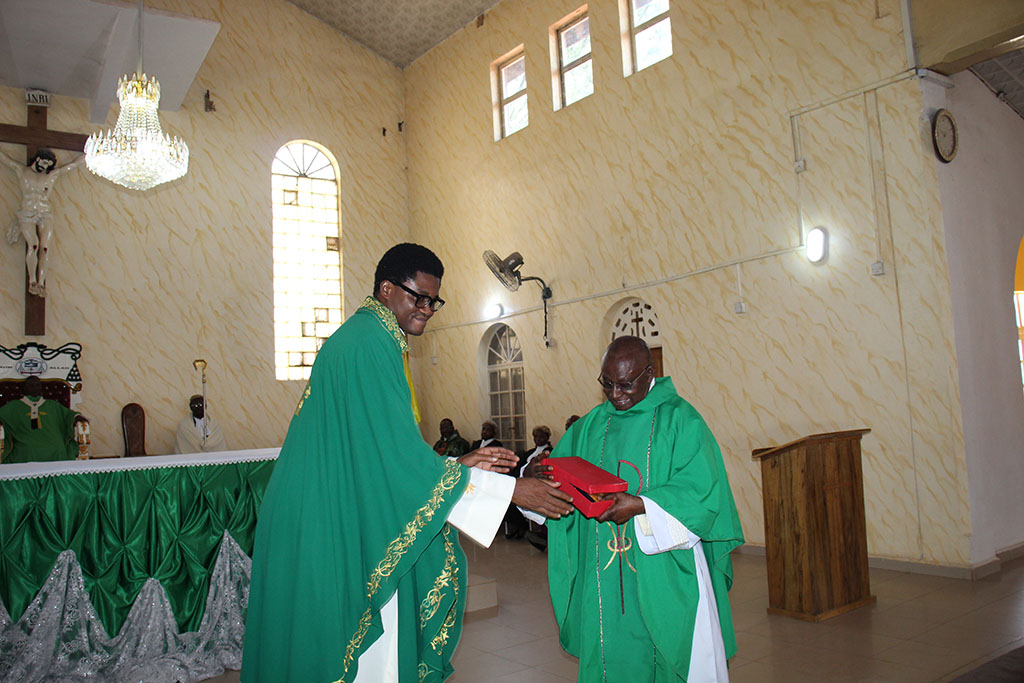
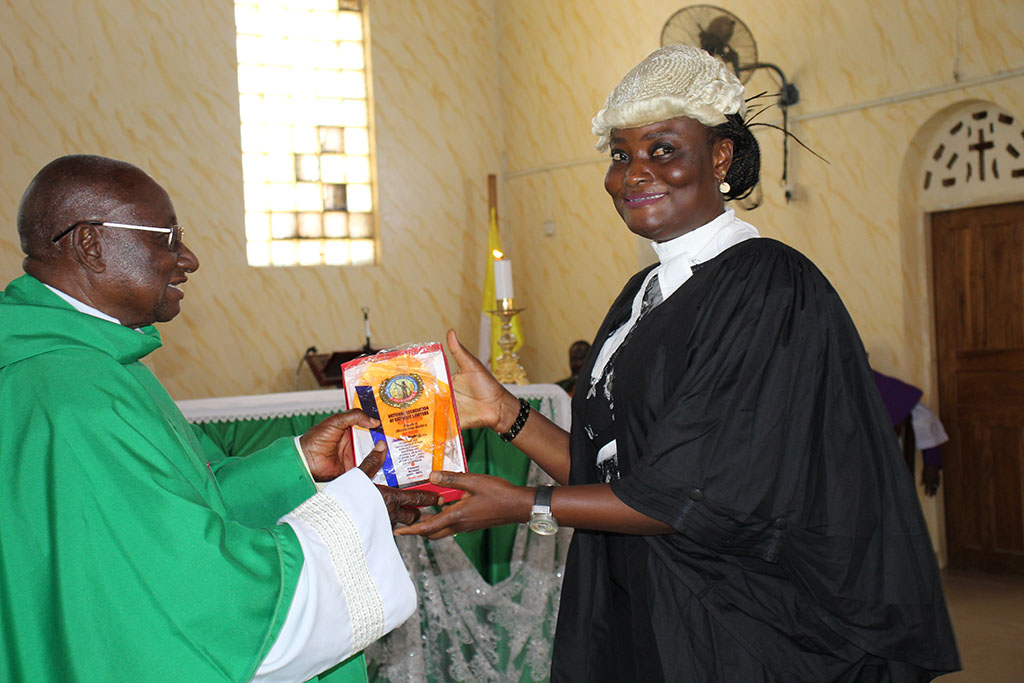
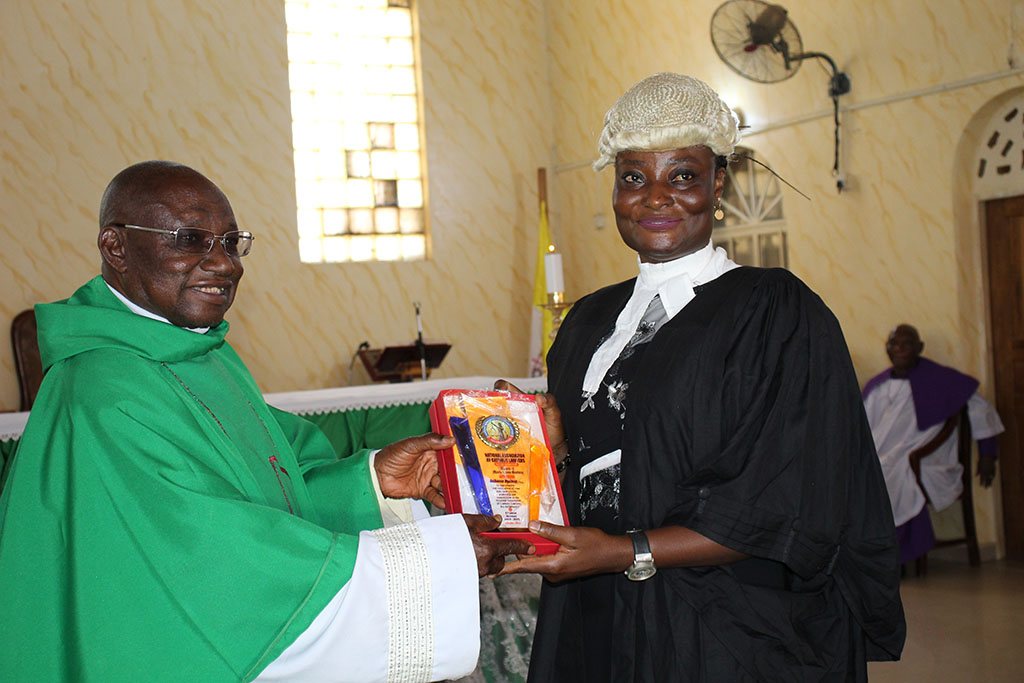
The day also featured the presentation of awards to outstanding members of the Catholic Lawyers Association. Among the honorees were Very Rev. Fr. Joseph Nyam, former chaplain of the association, and Gyang Zi, who recently attained the prestigious title of Senior Advocate of Nigeria (SAN). The new Chaplain, Very Rev. Fr. Stanley Igboechesi, presented the awards, highlighting the accomplishments of those who have distinguished themselves in both the legal profession and the association’s leadership.
Former Chief Justice of Plateau State, Retired Justice Damulak, and other distinguished guests graced the occasion, emphasizing the significance of the event for the legal and religious communities.

 TWE Media Network
Leave a comment