
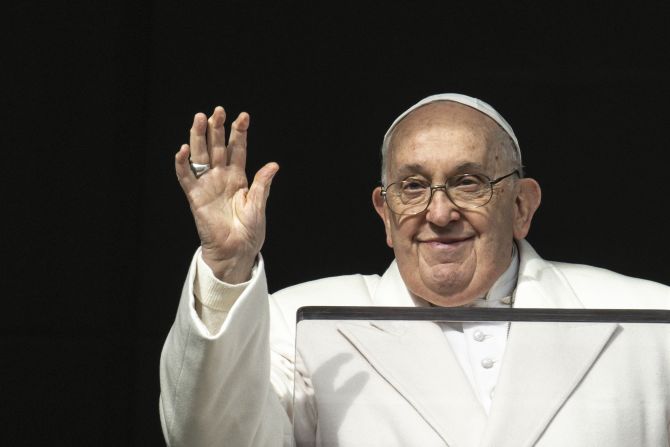
Silence and the ability to listen are rated high by Pope Francis as precondition in lending credible voices to the coming of Jesus Christ.
In his homily, during the second Sunday of Advent, the Pope presented John the Baptist as the one whose voice crying in the desert heralded the coming of the son of God.
At the Angelus, the Pope gave insight into the significance of the “voice” and “desert” in the body of Christ.
He explained that “the voice, a means to speak” and “the desert, an empty place where you do not communicate” are combined by John the Baptist to connote an environment that demands thoughtfulness and resourcefulness.
The Pope asserted that the desert where John the Baptist preached is a place of “silence and essentials” and also, “where someone cannot afford to dwell on useless things but needs to concentrate on what is indispensable to live.”
He described the location near the Jordan River, to symbolically represent the place where the children of God entered the promised land.
Underscoring the vanity of life, Pope Francis further said, “is an always relevant reminder: to proceed on the journey of life, we need to be stripped of the more because to live well does not mean being filled with useless things, but being freed from the superfluous, to dig deeply within ourselves so as to hold on to what is truly important before God.”
He added that silence and sobriety, even in words, the use of material possessions, or engagement with the media, should be integral elements in the life of the Christian.
Pope Francis mentioned that when silence is practiced the Spirit of God which stirs the heart will give the enablement to conduct ones speech properly.
“If someone does not know how to be quiet, it is unlikely they will have something good to say, while, the more attentive the silence, the stronger the word,” he said.
Pope Francis explained further that introspection plays a role in measuring “what place does silence have in my days?”
“Is it an empty, perhaps oppressive, silence? Or is it a space for listening, for prayer, for guarding my heart? Is my life sober or filled with superfluous things?” he said.
He encouraged that against all odds, “Let us value silence, sobriety and listening.”

 TWE Media Network
Leave a comment