
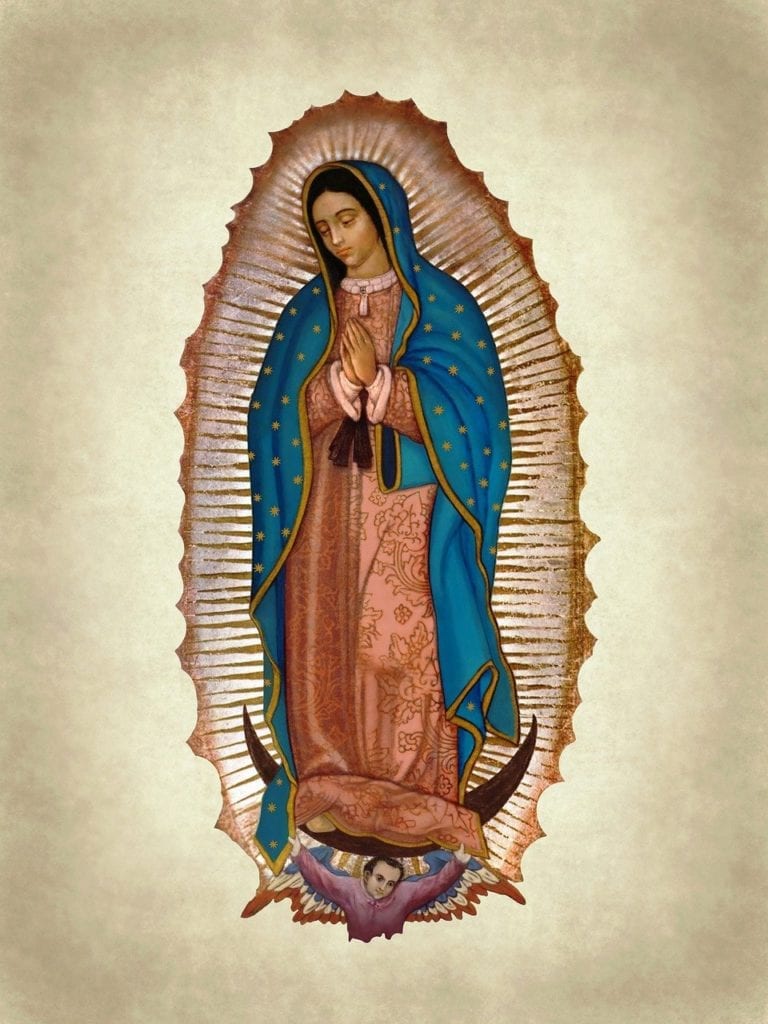
In his homily for the feast of Our Lady of Guadalupe, Pope Francis focused on the miraculous image preserved on the tilma, or cloak, of St Juan Diego, to whom Our Lady appeared.

“It is the image of the first disciple, of the mother of all believers, of the Church herself, “the Pope said, “which is imprinted in the humility of what we are and what we have, which is not worth much, but which will be something  great in the eyes of God.”

The Pope went on to reflect on the “small task” Mary gave to Juan Diego, to gather some flowers. “The flowers, in mysticism, signify the virtues that the Lord instils in the heart, they are not our own work, he explained. “The act of picking them reveals to us that God wants us to accept this gift, to perfume our weak reality with the works of good, eliminating hatred and fear.”

Pope Francis then turned to the message of Guadalupe, and Our Lady’s words, “Am I not here, I who am your mother?” These words, the Pope said, show that the “being” of the Virgin “is to remain permanently imprinted on these poor clothes, perfumed by virtues gathered in a world that seems incapable of producing them.”

These virtues, he said, “fill our poverty in the simplicity of small gestures of love.” They “illuminate our tilma, without our realising it, with the image of a Church that carries Christ in her bosom.”

This image on the tilma, he concluded, is a simple message, needing no explanation. “It is a message that protects us from so many social and political ideologies” that often seek to use the image of Our Lady of Guadalupe to justify themselves. But, the Pope said, the message of Guadalupe does not tolerate ideologies of any kind. “Only the image, the tilma, the roses.” Remain.

Source: Vatican News

Leave a comment

Recent posts

Quote of the week

What are the attributes of our Blessed Mother Virgin Mary that Christians should emulate?

The attributes of the Blessed Virgin Mary that Christians are encouraged to emulate include a range of virtues that reflect her exemplary holiness and deep faith.

Faith and Trust: Mary is recognized for her profound faith and docile acceptance of God’s Word. Her response to the angel Gabriel exemplifies a complete trust in God’s plan, which serves as a model for Christians to surrender to God’s will in their own lives.

Obedience and Humility: Her generous obedience to God’s call and her genuine humility are highlighted as virtues that Christians should strive to embody. Mary’s willingness to accept her role as the Mother of God demonstrates a humble acceptance of divine purpose.

Charity and Compassion: Mary’s solicitous charity, particularly in her visit to Elizabeth and her care for Jesus, reflects a deep love for others. This attribute encourages Christians to practice love and service towards their neighbors.

Wisdom and Reflection: Mary’s profound wisdom, as seen in her contemplative nature and her ability to ponder the events of her life, invites Christians to seek understanding and insight in their own spiritual journeys.

Fortitude in Suffering: Her strength during times of suffering, particularly at the crucifixion of her Son, serves as an example of enduring faith amidst trials. Christians are called to find strength in their own challenges by looking to Mary’s example.

Maternal Love: Mary’s maternal love is a model for all who are called to nurture and support others. This aspect of her character encourages Christians to foster a spirit of care and compassion in their communities.

Devotion and Prayer: The importance of prayer and devotion to Mary is emphasized, as she is seen as a powerful intercessor. Christians are encouraged to turn to her in prayer, seeking her guidance and support in their spiritual lives.

By reflecting on these attributes, Christians can strive to incorporate them into their own lives, thereby growing in holiness and virtue as they follow the example set by Mary, the Mother of God.

Magisterium of the Catholic Church